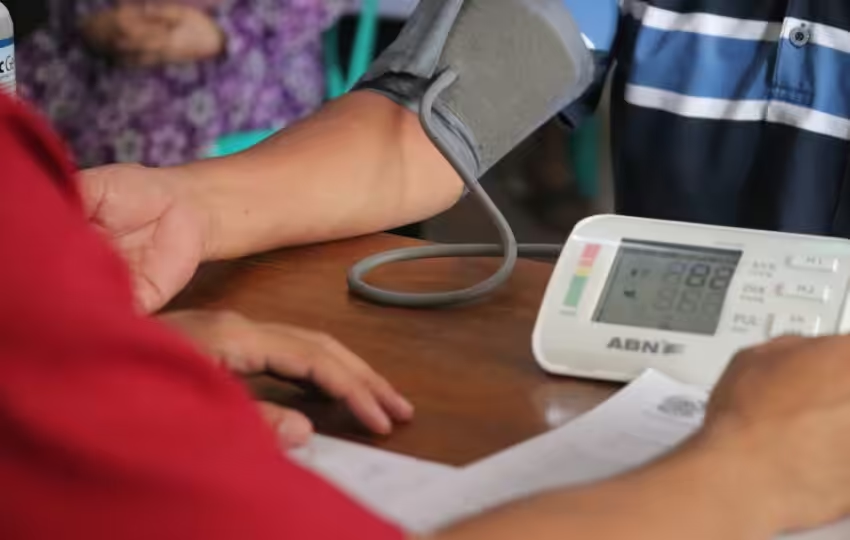
If you have a blood pressure machine at home, you’ve probably become quite familiar with those two numbers staring back at you.
118/70.
142/89.
136/86.
But what do they actually mean? And why do GP’s harp on about people’s blood pressure readings and try to squeeze your arm when we get to see you?
Let’s take the mystery out of blood pressure, hopefully, without turning this into a medical lecture.
So, what is blood pressure?
Think of your blood vessels a little like pipes, and your heart as the pump.
Blood pressure is the pressure of your blood pushing against the walls of your blood vessels as your heart pumps it around your body. Hence, the medical word for high blood pressure is Hyper(high)tension(pressure)…HYPERTENSION
Obviously, we need some pressure in the pipes to get the blood where it needs to go. Our head is up above our heart and so it has to work against gravity to make sure our brain is supplied. Our brain is very clever though, and if it thinks it hasn’t got enough blood it will bring you down to a level where it gets it……which is why people can faint if they have suddenly have low blood pressure.
The problem comes when that pressure in the system stays up too high over long periods of time because this puts extra strain on all your blood vessels in your brain, heart and other organs.
And here’s the slightly sneaky thing about it…
You can have high blood pressure and feel completely fine.
There isn’t necessarily a headache, a funny feeling or a little alarm going off somewhere saying, “Excuse me, your blood pressure needs attention.”
Most people with high blood pressure have no symptoms, which is one reason checking it is so important.
So, what do those two numbers mean?
When should you think, “Hmm… is that a bit high?”
Let’s say your machine says: 135/85 mmHg
There are two numbers because your blood pressure changes as your heart beats.
The top number — 135
This is your systolic blood pressure. It measures the pressure in your arteries when your heart contracts and pumps blood around your body.
The bottom number — 85
This is your diastolic blood pressure. It measures the pressure when your heart relaxes between beats. We are most interested in this one as if this is normal, we know that the pressure goes down in the system.
- Top number = heart pumping
- Bottom number = heart relaxing
Simple.
What numbers should I be looking for?
This is where things can get a little confusing because blood pressure measured at home is interpreted differently these days, from blood pressure measured in a clinic situation.
As a general guide, blood pressure (BP) is considered high if it is: 140/90 mmHg or higher in a clinic
or
135/85 mmHg or higher when measured at home.
But please don’t panic because your machine has flashed up a high number. Like I said earlier, it is what the system is doing over long periods of time that is most important for your health.
Absolutely everyone’s blood pressure (BP) naturally changes throughout the day. Stress, activity, caffeine, illness and even getting stressed about taking it can affect it!
That’s why us docs are interested in the average and the pattern, rather than one isolated reading. It is partly why I am doing this blog as people get so stressed by a one off reading that it will probably send their blood pressure up!
Why a home blood pressure machine is so useful!
With the widespread availability of blood pressure machines now (and no you don’t need some fancy machine, a basic Omron one is perfect), we are less likely to end up with patients over treated.
In the past, if someone’s blood pressure was high in the surgery people were started on lifelong medication and that was that…. Having a blood pressure monitor at home gives you a chance to see what your blood pressure is doing in your normal environment.
If you’ve been asked to monitor your blood pressure at home, follow the instructions you’ve been given. Generally, readings are taken twice, at least a minute apart, and often in the morning and evening over several days.
What happens if these readings are high? and you are told that you have a diagnosis of hypertension
“If I feel fine, why do I need to treat it?”
This is probably the biggest question when it comes to hypertension and why it is so important to understand the condition and what we are trying to do by treating it.
We’re trying to reduce the strain on your body and lower your risk of serious problems in the future.
Think about those pipes we talked about earlier and the effect of the pressure continuously being high in them, this tension that the system is under can damage the blood vessels all over the body.
Although we don’t really know why some people will have high blood pressure and others won’t, what we do know is that consistently high pressure increases the risk of cardiovascular problems such as heart disease, heart attack, stroke and heart failure. It can also affect organs such as the kidneys and eyes.
That’s the really important bit.
So when we treat hypertension, we’re not simply trying to make a number on your machine look nicer.
Do I need to start medication?
Not necessarily. Whether we start medication straight away will depend on your individual circumstances, for example: your age, how high the readings are, other health problems and family history.
The important lifestyle changes people can make to help reduce their risk of high blood pressure are: getting physically active, eating a healthy diet, reducing alcohol, maintaining a healthy weight and stopping smoking.
However, there will be patients that are super healthy and still have high blood pressure.
We need patients to see that needing to start blood pressure tablets isn’t some failure on their part, but that simply your body needs a little extra help keeping that pressure under control, so it keeps you healthier for longer.
Don’t become obsessed with the machine, or buy some fancy kit that constantly measures your BP!
One final word of warning. Now that you’ve got a blood pressure machine, you might be tempted to check it every time you walk past it.
Please don’t.
And if you get one reading that’s higher than usual, don’t immediately assume something terrible is happening. Your blood pressure isn’t a fixed number. It moves around during the day — that’s normal.
Look at the pattern.
So, what should you remember?
If you remember nothing else from this blog, remember these four things:
- The top number is the pressure when your heart pumps.
- The bottom number is the pressure when your heart relaxes.
- For home readings, an average of 135/85 mmHg or above is generally considered high when assessing for hypertension but remember a few readings over this are ok.
- We treat high blood pressure because of what it can do to your health over time — even if you feel perfectly well today.
So next time your machine gives you a reading, hopefully those numbers will feel a little less mysterious.
And if your readings are consistently higher than they should be, don’t just put the machine back in the cupboard and hope for the best.
Knowing your numbers means you’ve got something you can actually do something about.
Our Location
Our state of the art clinic is ideally situated in West Lancashire between Southport and Ormskirk with parking and disabled access.
Book a GP Appointment
If you have any concerns or worries about your blood pressure, book an appointment with Dr Jen at Revitamed Clinic.